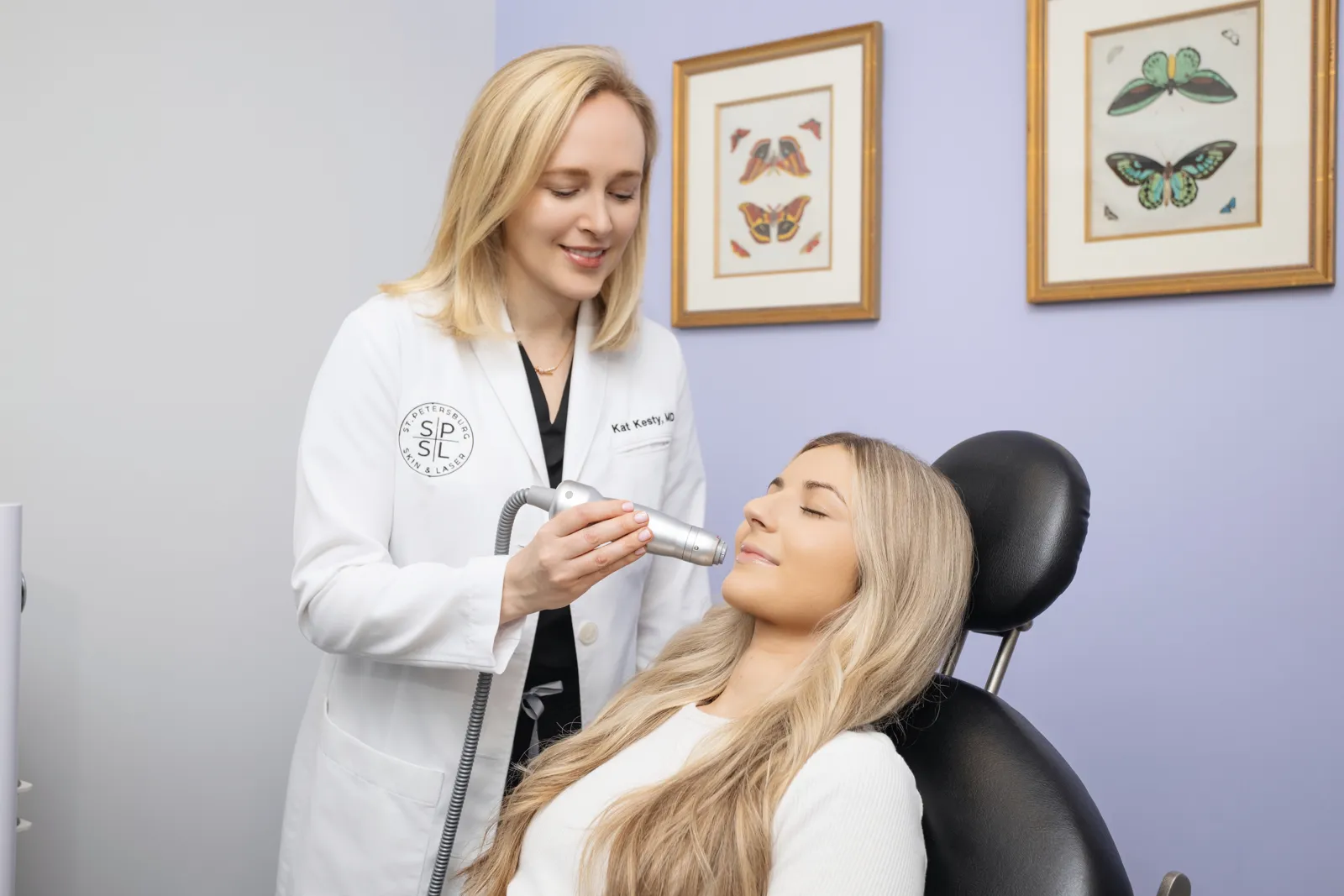
Medically reviewed by Dr. Kat Kesty, MD, double board-certified dermatologist and fellowship-trained Laser surgeon. Last updated .
Laser facial at a glance
- Treatment time
- About 15 to 20 minutes for a full face
- Downtime
- Little to none. Redness for a few hours is typical.
- How often
- Every 2 to 4 weeks for a series, then maintenance
- Performed by
- Dr. Kat Kesty or Dr. Chelsea Kesty, double board-certified dermatologists
- Skin types
- All, with settings adjusted for skin tone
- Good for
- Melasma, brown spots, sun damage, uneven tone, dull skin
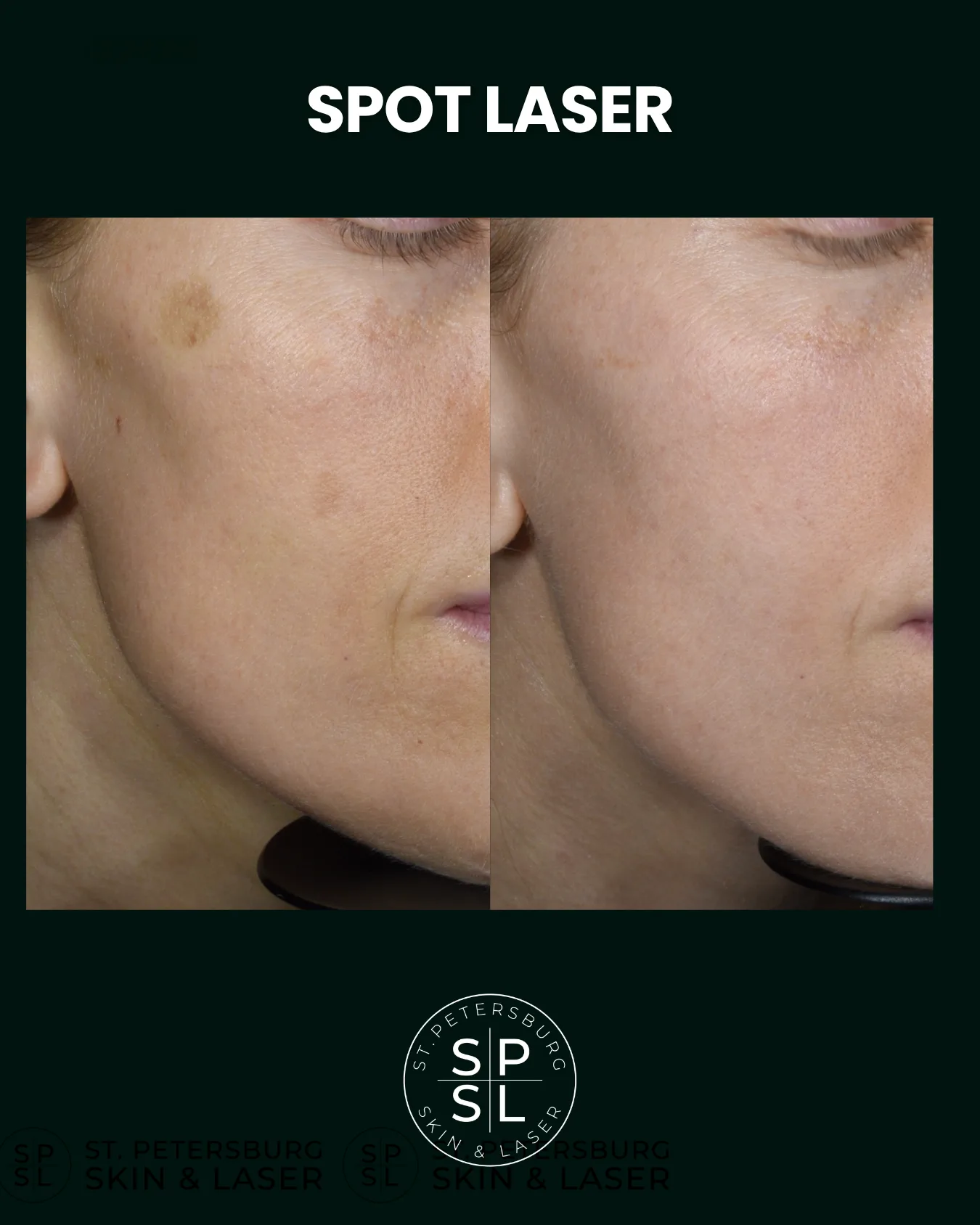
A patient came in a few weeks before her daughter's wedding in Tampa. Melasma across both cheeks, sun spots on her forehead from years on the water, and no interest in peeling for a week. She wanted to look like herself in the photos, only more even. That is the job a Laser facial does well.
A Laser facial at St. Petersburg Skin & Laser uses a Picosecond Laser. It treats pigment, some of the redness that comes with sun damage, and, with the right settings, the collagen layer underneath, while leaving the surface of the skin intact. You walk out a little pink. You go to dinner that night.
That last part surprises people, so it is worth saying plainly: little to no downtime does not mean little to no result. The Laser is doing real work. It is just doing it beneath the surface instead of by removing it.
What is a Picosecond Laser?
A Picosecond Laser fires pulses measured in Picoseconds, which is one trillionth of a second. Older pigment Lasers fire in nanoseconds, a thousand times longer. That difference changes how the energy behaves in skin. Instead of heating the target until it breaks down, a Picosecond pulse hits it so fast that the pigment shatters from the pressure of the impact. Physicians call this a photomechanical or photoacoustic effect. The surrounding tissue gets far less heat.
The 2023 systematic review in Lasers in Medical Science (PubMed 36897459) pooled the melasma trials on Picosecond Lasers and found meaningful improvement in pigment scores with a low rate of the rebound darkening older Lasers were known for. A separate randomized trial (PMC10086227) found the 1064 nm Picosecond wavelength outperformed 2% hydroquinone cream for melasma over the study period.
What the Laser actually targets
Pigment is the target most people know about. It is one of three.
Melanin
Certain Picosecond wavelengths are absorbed by melanin. That lets us treat brown spots, sun-related pigment, and the pigment component of melasma. The goal is to break up unwanted pigment, not to remove your skin's normal color. The melanin gets broken down, and the treated area darkens at first, then lightens over the next 6 to 8 weeks.
Hemoglobin
Some wavelengths interact with the red blood cells in tiny vessels. Sun-damaged skin is rarely just brown; there is usually a background of blotchy redness too. Depending on the protocol, the same treatment can address part of that.
The dermis
With focused, higher-intensity settings, Picosecond energy can be delivered below the surface to create microscopic treatment zones inside the dermis. Dermatologists call this laser-induced optical breakdown. You may have heard it described as "bubbles" under the skin. The epidermis stays intact, and the body responds to those microscopic zones by remodeling collagen over the following months.
Which of the three we aim for depends on your skin and what is bothering you. Your physician chooses the wavelength, energy, and pattern at the consultation.
The same Laser as a fractional Laser
Two handpieces change what the Picosecond Laser does. The MLA (Microlens Array) and the DLA (Diffractive Lens Array) take the beam and concentrate it into microscopic focal points instead of spreading it evenly across the skin. Each focal point carries very high energy. The skin around it receives much less.
Those concentrated pulses can create Laser-induced optical breakdown and a controlled tissue response beneath the surface. The body reads that as a signal to build collagen and remodel, while the surrounding tissue is largely preserved. The MLA and DLA optics fractionate the beam in somewhat different ways, but the clinical goal is the same.
Fractional Picosecond treatment has been studied for acne scars, enlarged pores, uneven texture, fine lines and wrinkles, and overall rejuvenation. Clinical studies have shown improvements in scar volume, texture, wrinkles, pores and skin firmness. It lets us use Picosecond technology for collagen remodeling and resurfacing with relatively limited downtime compared with traditional ablative resurfacing, alongside its work on pigment and tattoos. Which handpiece, wavelength and setting fit your skin is decided at the consultation. For deeper scarring, our acne scar treatment page covers the full range of options.
Picosecond Laser Facial vs. Ablative Resurfacing
People often ask whether a Laser facial is a "lighter" version of CO2 resurfacing. It is a different tool.
| Picosecond Laser Facial | Ablative resurfacing (CO2, erbium) | |
|---|---|---|
| Surface of the skin | Stays intact | Removed in a controlled way |
| Main mechanism | Photomechanical (pressure) | Thermal (heat) |
| Targets | Pigment, some redness, collagen | Texture, deep wrinkles, scars |
| Downtime | Hours of redness | 5 to 14 days of open healing |
| Skin tones | All, with adjusted settings | More limited in darker skin |
| Results | Gradual, over a series | Larger change from one session |
| Best for | Melasma, spots, sun damage, brightening | Deep lines, acne scars, heavy texture |
If your main complaint is texture, deep wrinkles, or scarring, our CO2 Laser resurfacing page is the one to read. If the complaint is color, keep reading.
Picosecond Laser Facial vs. IPL and BBL
We offer IPL photofacial and BBL broadband light as well, so this comes up daily. Broadband light is not a Laser. It floods the skin with a range of wavelengths and works well for scattered sun spots and redness in lighter skin. A Picosecond Laser delivers one wavelength at a time, in far shorter pulses, and can be tuned for darker skin tones where IPL carries more risk. For melasma specifically, we lean toward the Picosecond Laser because it delivers less heat, and heat makes melasma worse. Some patients do best with both, staged. That is a consultation conversation.
What a Laser facial can improve
Melasma
Melasma shows up as tan, brown, or gray-brown patches across the cheeks, forehead, upper lip, and chin. It is driven by sun, visible light, hormones, heat, and inflammation, which is why it comes back. Treating it aggressively tends to backfire.
For the right patient, the Picosecond Laser is one part of a plan. The other parts are medical-grade skincare, a pigment-suppressing topical, broad-spectrum sunscreen with iron oxides for visible light, and honest expectations. Our melasma treatment page goes into the whole approach.
Brown spots and sun spots
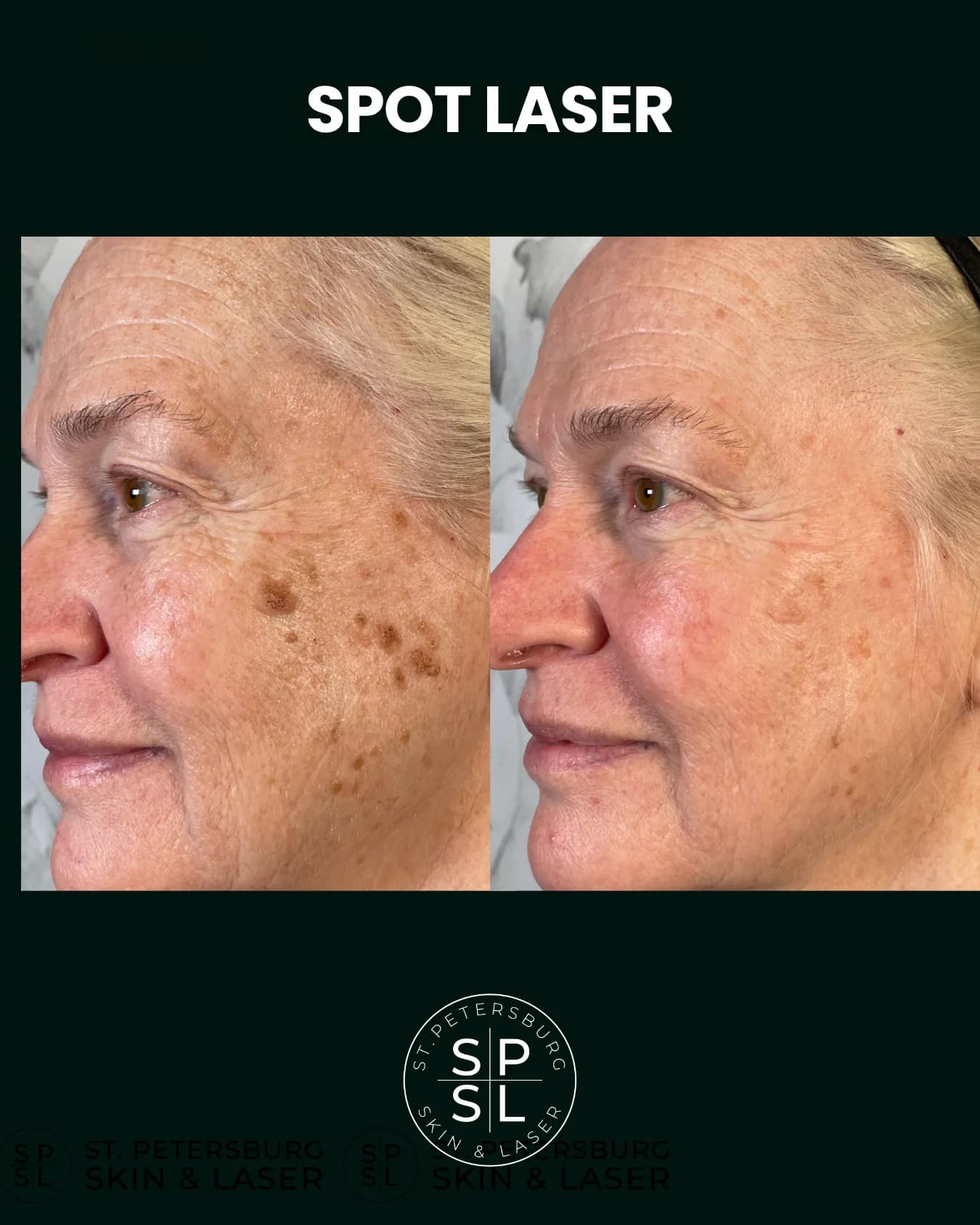
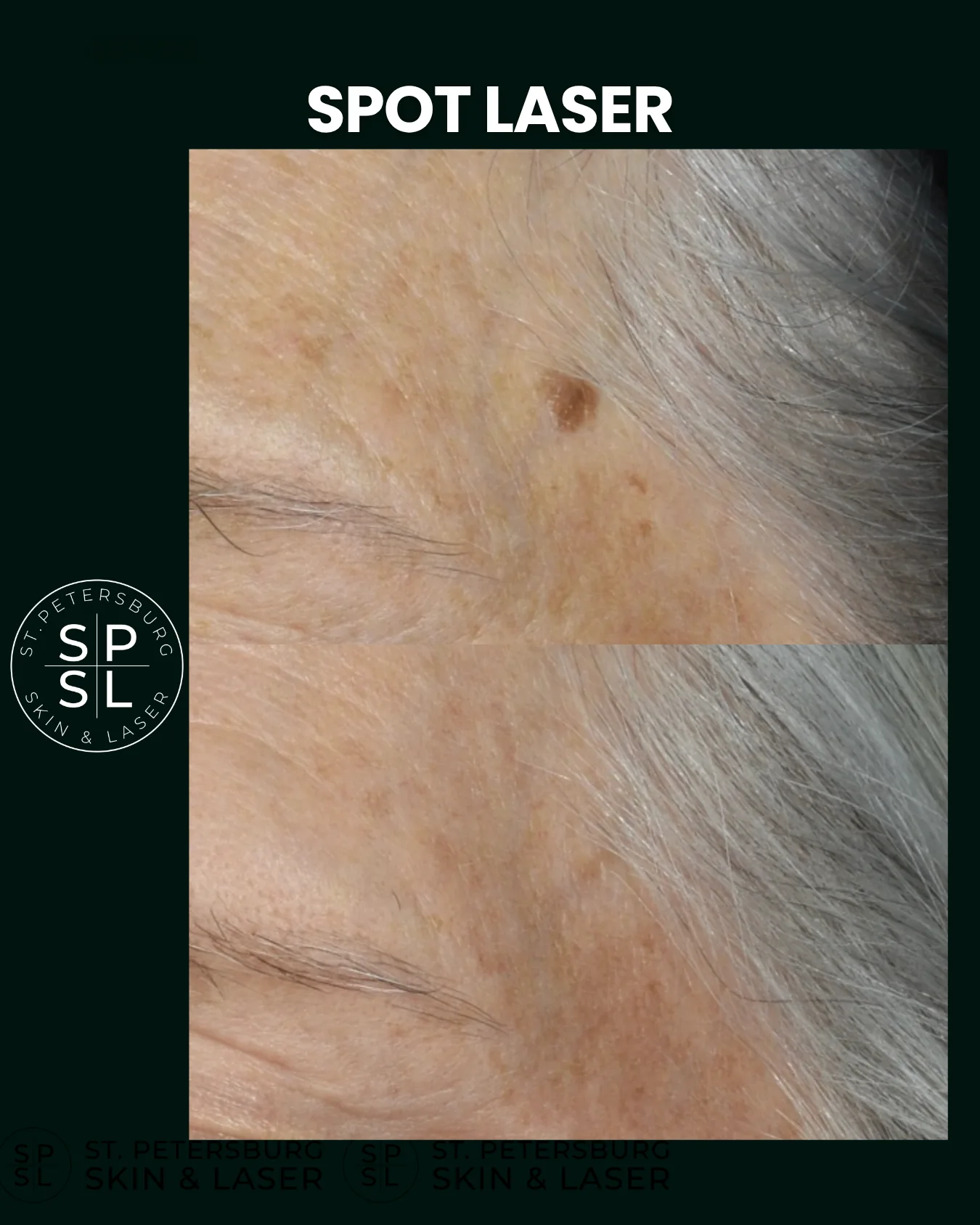
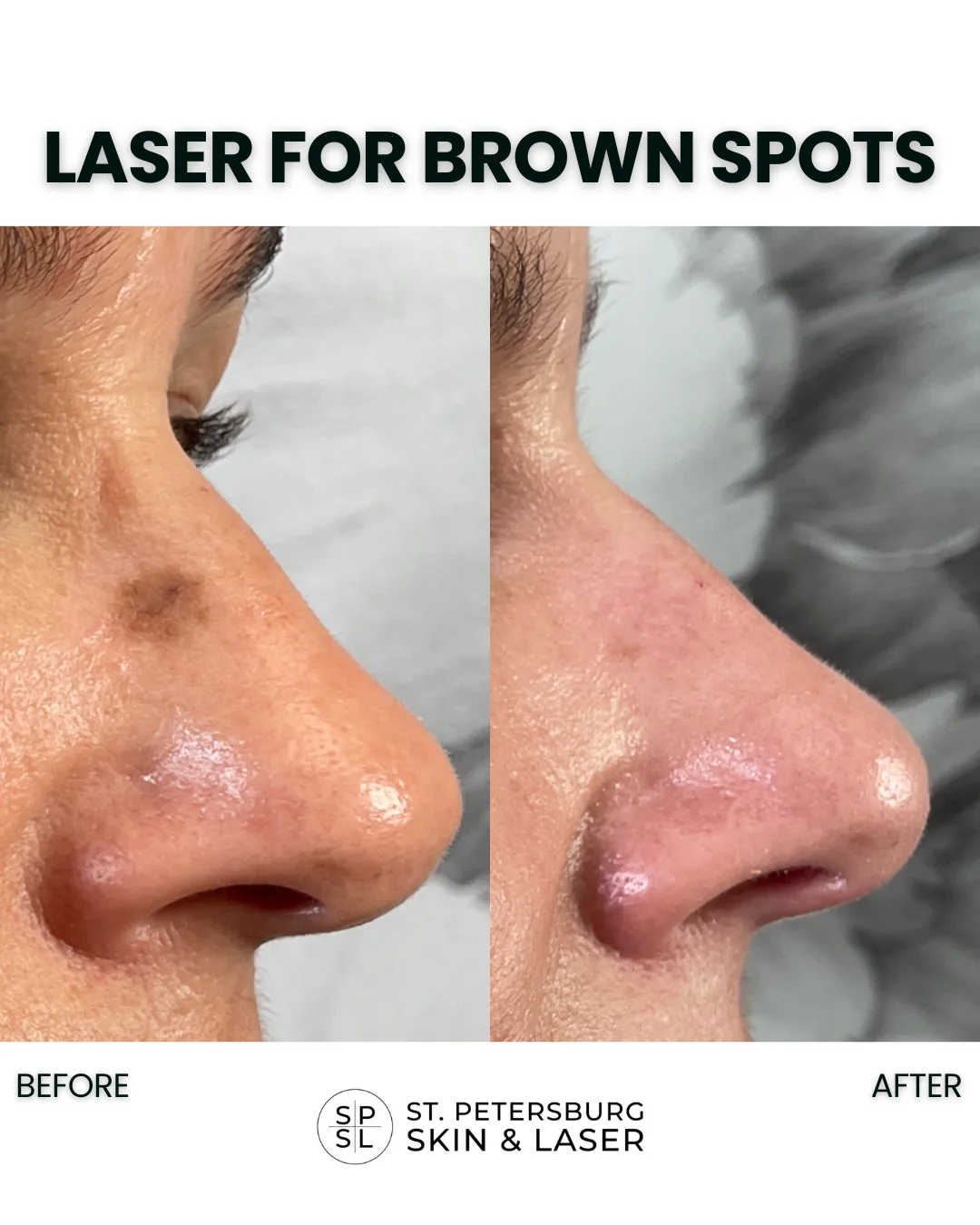
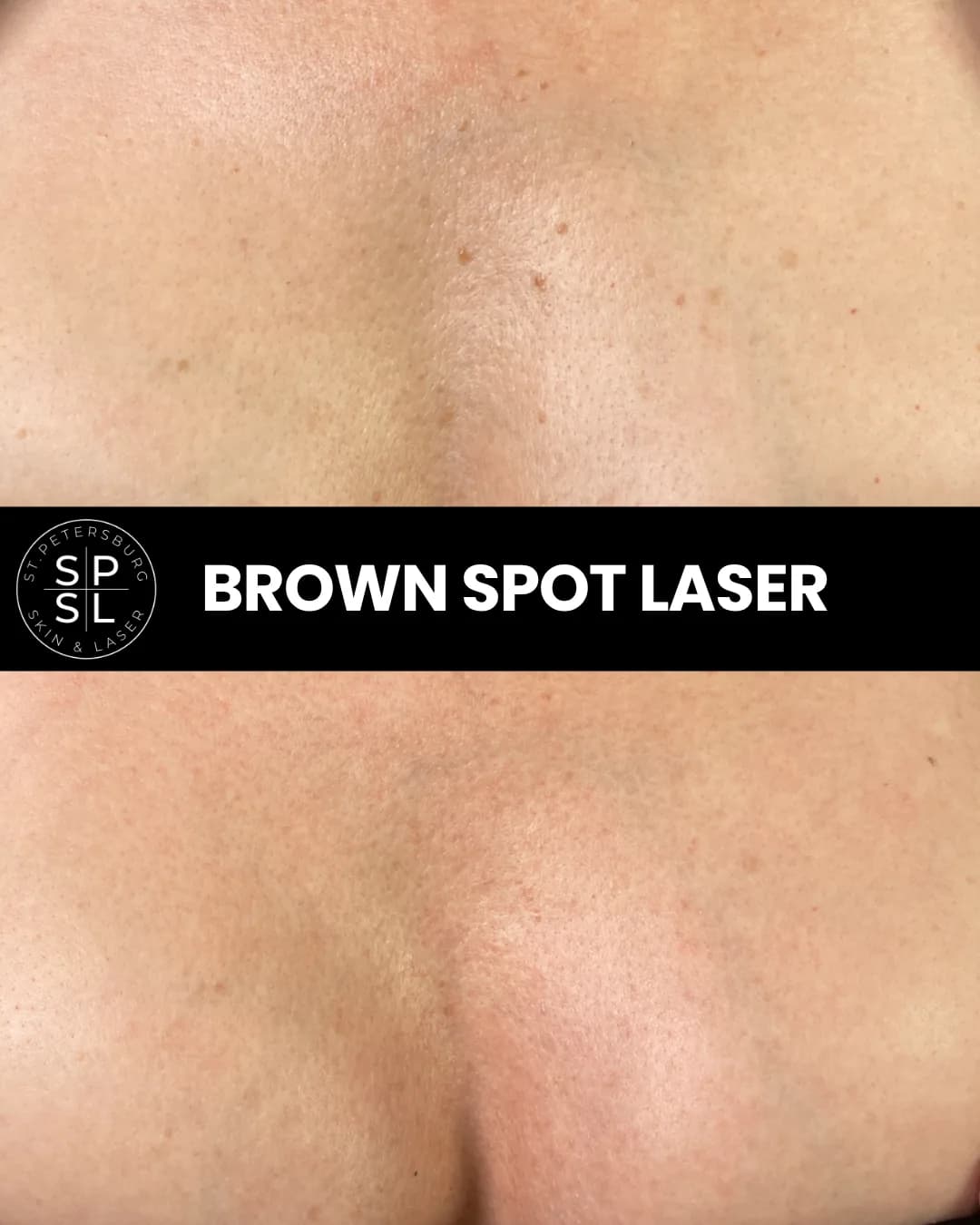
Solar lentigines, the flat brown spots that collect on cheeks and temples after decades of Florida sun, respond well. The Laser fragments the pigment and the body clears it over the following weeks. The pigment gets broken down. Spots darken first, then lighten over the next 6 to 8 weeks.
One rule we do not bend: any spot that is new, changing, irregular, or bleeding gets looked at by the dermatologist before a Laser touches it. Some things that look like sun spots are not. See our dark spots treatment page for what we check.
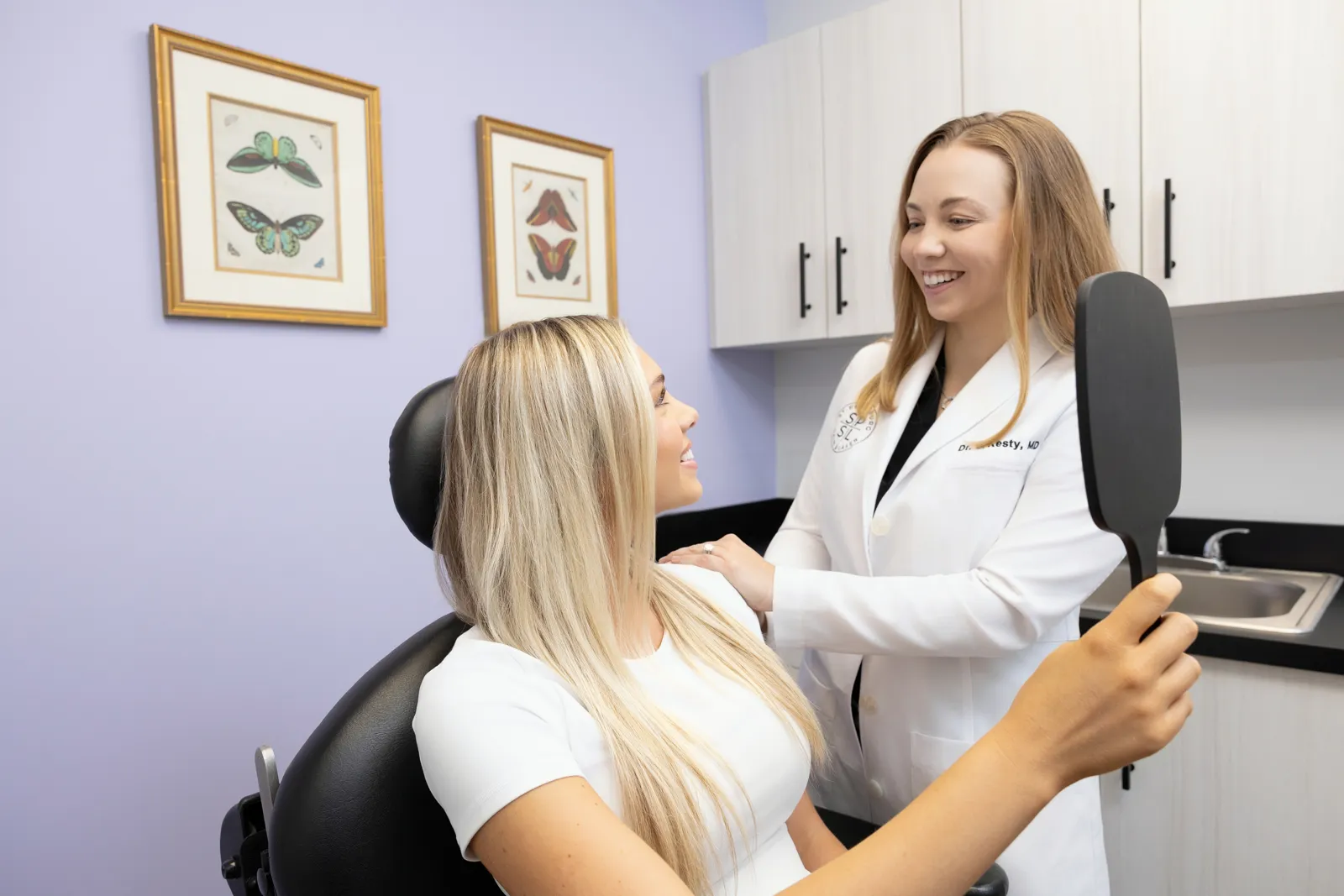
Sun damage
Photodamage is a mix of problems: pigment, redness, dull tone, and thinning collagen. Because a Picosecond Laser can be set for each of those targets, it fits into a broader plan for sun-damaged skin rather than treating one symptom at a time.
Uneven tone and brightening
Some patients have no single spot to point at. Their skin just looks tired and blotchy. A series of Laser facials evens the tone and, with the dermal settings, improves the quality of the skin over a few months. The goal is a face that looks like it slept, not a face that looks bleached. See uneven skin tone for the other tools we use alongside it.
Is a Laser facial safe for darker skin?
Yes, with the right settings. This matters more than any other question on the page.
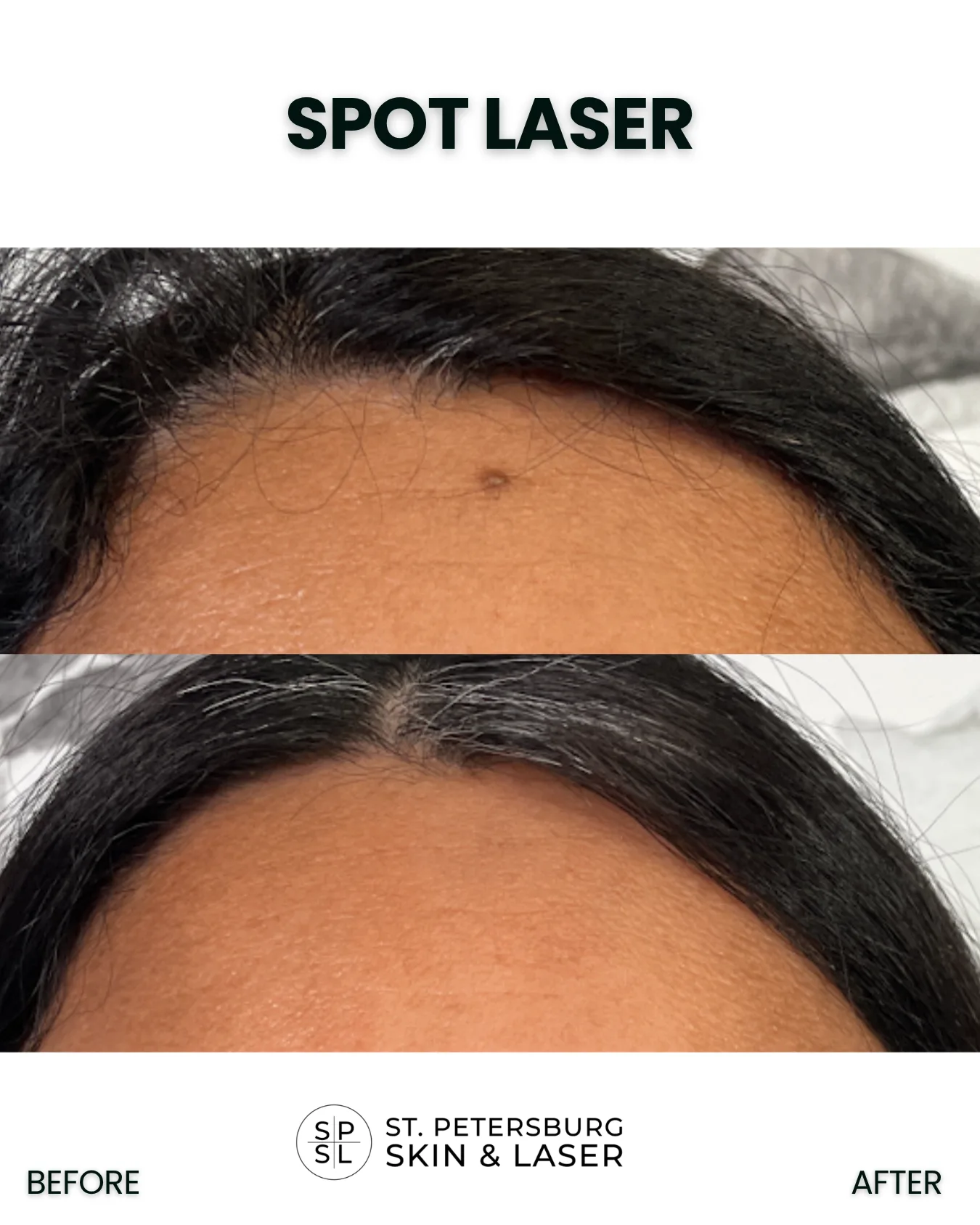
Melanin is present throughout every skin type. Any Laser that targets pigment can also hit the skin's own pigment if the wavelength, energy, and pulse are wrong for that patient. Darker skin tones and anyone prone to post-inflammatory hyperpigmentation need lower energy, longer wavelengths (the 1064 nm option in particular), and a physician who has treated a lot of Fitzpatrick IV through VI skin. Both Dr. Kat Kesty and Dr. Chelsea Kesty have. The result beside this text is a forehead spot on deeper skin; look at the after.
We do not use identical settings on every face. We would rather do a test spot and wait two weeks than guess.
Who is a good candidate?
You are probably a candidate if you want to improve melasma, brown spots, sun damage, uneven tone, dullness, or overall brightness, and you cannot or do not want to take a week off for healing. You are probably not a candidate right now if you are pregnant, have an active skin infection in the area, have used isotretinoin recently, or have a suspicious lesion that has not been evaluated.
The consultation settles it. Your physician looks at your skin type, your pigment pattern, and what you actually want, then picks a protocol or tells you that a different treatment would serve you better.
How often, and how many?
Most patients do a series of three to six treatments, two to four weeks apart, then drop to maintenance every few months. Pigment improves progressively as the body clears what the Laser broke up. Collagen changes lag behind and keep developing for months after the last session.
Some people see a difference after one treatment. That is real, but it is not the plan. The plan is the series.
Booking before a wedding, vacation, or shoot
You can. Plenty of our patients schedule a Laser facial ten days to two weeks before an event. Redness usually settles the same day, and treated spots darken briefly before they fade, which is why we do not book it the morning of.
If it is your first treatment, give it three to four weeks so we know how your skin responds. Skip this paragraph if you are a regular; you already know your timeline.
What it feels like, and what happens after
Most people describe it as quick snaps against the skin, like a rubber band flick, over in 15 to 20 minutes. Numbing cream is available if you want it. Afterward the skin is pink and warm for a few hours. Some patients get mild swelling or a sandpaper feel over treated spots for a day or two. That is expected.
For the next week: sunscreen every morning, no scrubs or acids, no picking at spots that darken. Your physician sends you home with written instructions for the exact protocol you had, because a pigment-only session and a dermal-remodeling session have different aftercare. Our guide to what to expect at a Laser appointment covers the visit itself.
What does a Laser facial cost?
We do not publish prices for this treatment. Cost depends on the area treated and whether you are doing a single session or a series, and your physician quotes it at the consultation. Your $197 consultation fee is applied to any treatment you choose.
A quick note for anyone comparing quotes: the number on a med spa menu usually describes a treatment done by a technician on a device chosen for the whole menu. Here every Laser facial is performed by a dermatologist who chose the wavelength for your skin. That is what you are paying for.
Why have a dermatologist do this?
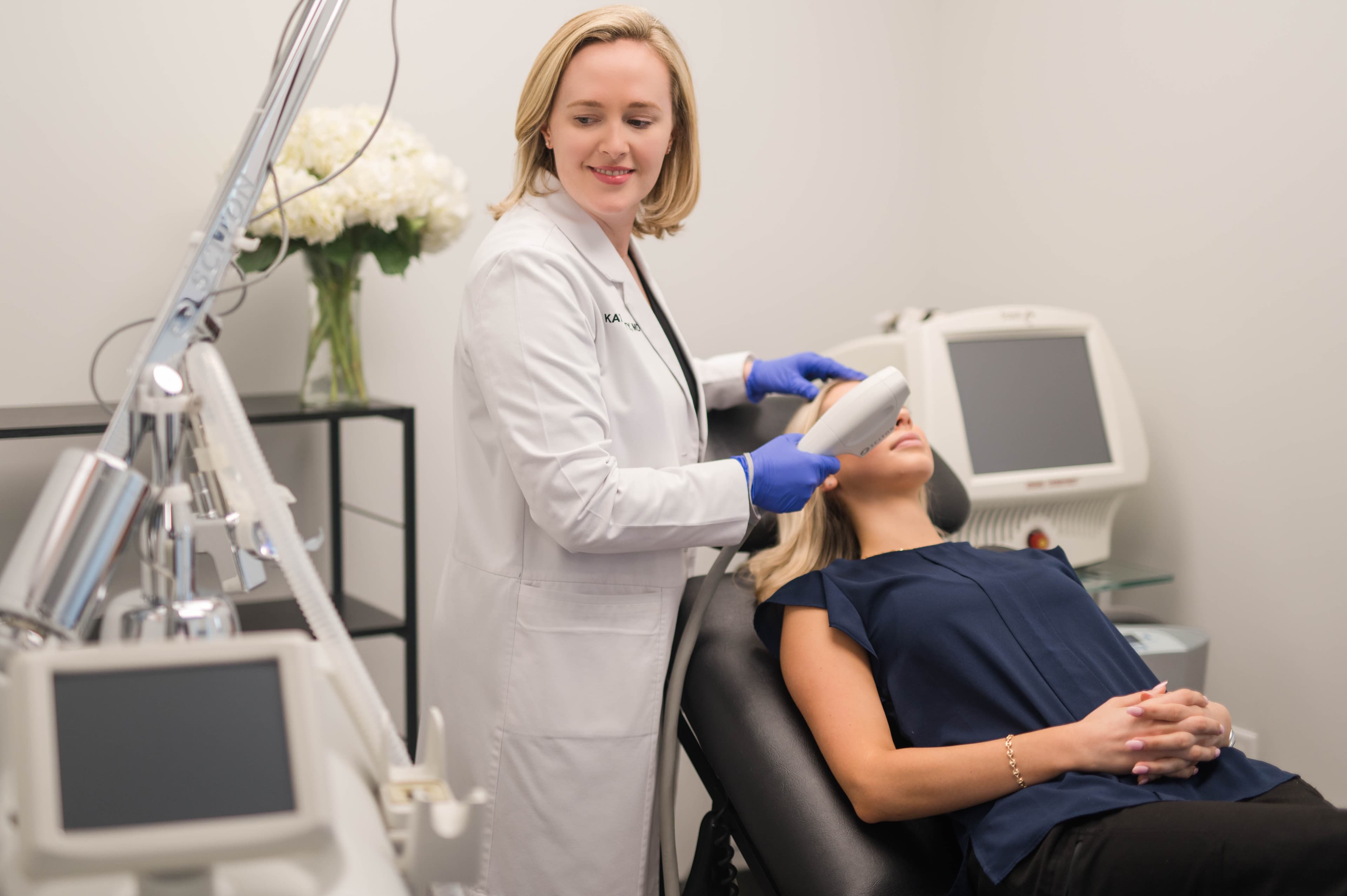
A Picosecond Laser has several wavelengths, adjustable energy, adjustable spot size, and pattern handpieces. The same device can brighten a face or burn it. The difference is the person setting the parameters and the judgment about which spots to treat at all.
Dr. Kat Kesty is a double board-certified dermatologist and fellowship-trained Laser surgeon. Dr. Chelsea Kesty is a double board-certified dermatologist. They are the only people who perform Lasers at this practice. Florida law lets a lot of other people fire a Laser; our blog on who can legally perform Laser treatments in Florida explains the landscape.
Our Picosecond Laser platform carries 1064 and 532 nm wavelengths, 595 and 660 nm dye handpieces, and MLA and DLA fractional optics. The practice runs more than thirty Laser systems, and a Laser Facial is not always the right one for a given face. Some patients who come in asking for the Picosecond Laser leave with a plan for BBL, or for a non-ablative Laser, or for CO2. The point of the consultation is to match the tool to the skin, not to sell the tool.
Combining a Laser facial with other treatments
Most faces have more than one thing going on. Pigment plus texture. Sun damage plus acne scars. Melasma plus fine lines around the eyes. A Laser facial can be paired with other treatments in the same visit or staged across months. Common pairs: Laser facial plus wrinkle relaxers, Laser facial after a course of acne scar treatment, or a Laser facial series while waiting for the right season to do CO2. The same Picosecond platform is what we use for Laser tattoo removal. Your physician maps it out.
Frequently asked questions
References
- Efficacy and safety of Picosecond Laser for the treatment of melasma: a systematic review and meta-analysis. Lasers Med Sci. 2023. PubMed
- Use of Picosecond Laser for melasma treatment: a narrative review. 2023. PubMed
- Picosecond 1064 nm vs 755 nm Laser vs 2% hydroquinone for melasma: randomized controlled trial. PMC
100 40th Ave N, St. Petersburg, FL 33703 · 727-474-9399
Monday to Friday, 8:30 AM to 5:00 PM. Patients travel from Tampa, Clearwater, Sarasota and across Pinellas County; see out-of-town patients.
Related treatments
Pigment is usually one of several things going on. These are the pages patients read next.
- Melasma treatmentThe full plan: Laser, topicals, and sun strategy for a condition that comes back.Read more
- Dark spots treatmentSun spots, age spots, and the ones that need a dermatologist to look first.Read more
- Sun-damaged skinPigment, redness, and texture from Florida sun, treated together.Read more
- Laser tattoo removalSame Picosecond platform, four wavelengths, performed by a dermatologist.Read more
- CO2 Laser resurfacingFor texture, deep lines, and scars when you can take the downtime.Read more
- Laser skin resurfacingThe overview of every resurfacing option we offer.Read more

Trusted by Patients & Recognized by Industry Leaders